
美国恐怖故事第三季
哈佛大学教授:英女王应被悼念,但她的一个遗产应被废除_我的网站

A |
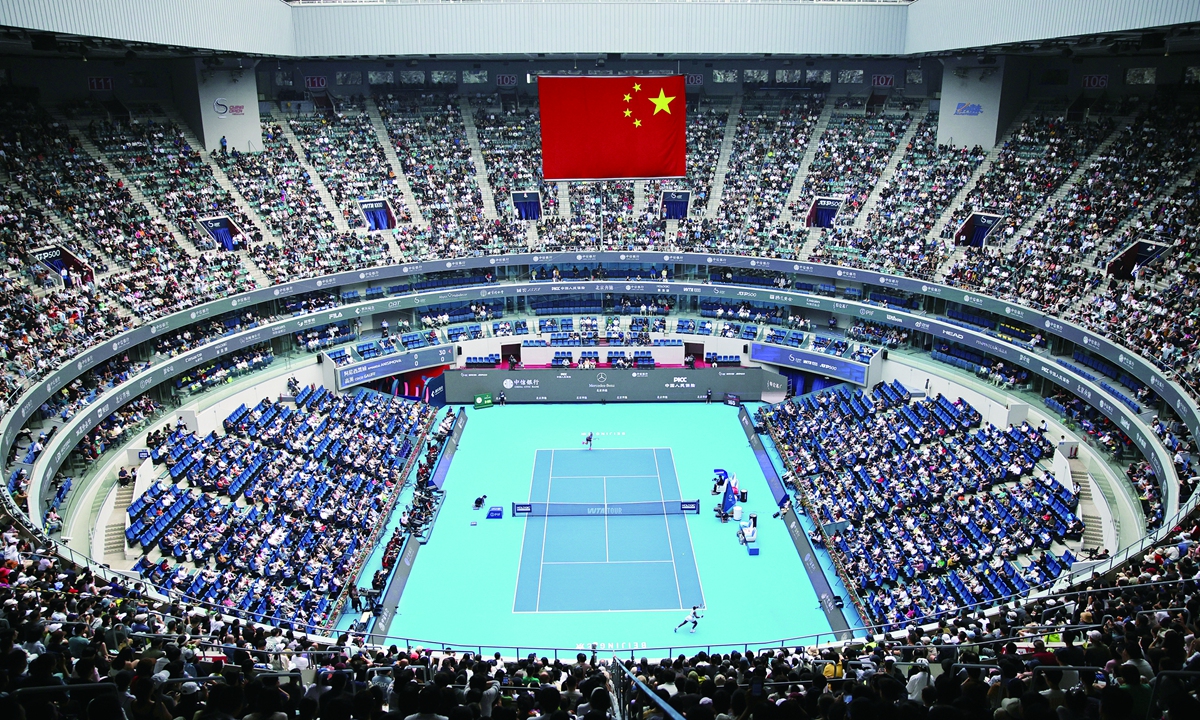
As international tennis tournaments multiply across China this autumn, organizers are increasingly looking beyond the court, seeking to turn a trip to a tournament into a broader travel experience.
The 2026 Chinese tennis season, starting in September, will bring a series of international events to cities including Chengdu, Hangzhou and Suzhou besides flagship events in Beijing and Shanghai.
The growing concentration of tournaments is giving Chinese cities a chance to connect sporting events with local consumption, cultural activities and tourism.
Shanghai offers perhaps the clearest example of how that strategy is developing.
In 2025, the Shanghai Masters attracted more than 250,000 spectators, with about 10 percent coming from overseas and 60 percent from outside Shanghai, according to the Shanghai municipal government. The tournament also generated more than 100 million yuan ($14.8 million) in ticket revenue.
The figures have encouraged organizers and city authorities to think beyond the traditional model of selling a ticket to a tennis match.
During this year's Shanghai Masters, ticket packages will include options combining matches with direct transportation, family experiences and visits to other Shanghai attractions, the organizers have announced.
The approach fits into Shanghai's broader effort to use major sporting events to attract international visitors.
The experience in Shanghai suggests that the relationship between tennis and tourism can work in both directions: a tournament brings people to a city, while the city gives spectators reasons to stay longer and spend money beyond the stadium.
For host cities, making tennis more than a sporting event can also serve as a platform for destination marketing, particularly when the event attracts an international audience.
Sports tourism can offer cities something that conventional sightseeing does not, according to tennis commentator Chen Chi.
"Tennis events can activate destinations and build recognizable identities," Chen told the Global Times. "The international player base and global fan following of tennis give host cities an audience well beyond their local audiences, which is widely seen at the Grand Slam events."
The challenge now is to make those visitors stay longer and explore more of the host city. That is where the "ticket plus" model comes in.
Rather than simply asking visitors to buy a match ticket, organizers are increasingly packaging the tournament with hotels, transportation, attractions and other experiences.

Culture matters
In Suzhou, East China's Jiangsu Province, organizers of the WTA 125 Suzhou Open are trying to connect the tournament with the city's existing cultural resources.
Zhou Yunsong, tournament director of the Suzhou Open, said the timing gives spectators an opportunity to combine a tennis trip with a holiday as it partially overlaps with the annual National Day holidays.
"For our spectators, this is a rare opportunity to combine watching tennis with travel. For domestic tennis fans, they don't have to take time off work as they normally would," Zhou told the Global Times.
The tournament venue, the Yangcheng Lake International Tennis Center, is located near several cultural and commercial areas in Suzhou.
The event has also introduced a hotel-and-tennis package, while organizers have arranged cultural experiences for players, including visits to Suzhou's gardens and local cultural venues.
"To give players an immersive experience of Suzhou's charm, we have planned a range of cultural activities, including visits to the Suzhou Museum, tasting authentic Suzhou cuisine, listening to Kunqu Opera, trying on traditional Chinese qipao and visiting embroidery workshops," Zhou noted.
Zhou sees a broader change in the way people plan trips.
"Traveling to sporting events is becoming a choice for more and more people," he said. "In the past, tourism was about sightseeing - going to a destination, taking photos and checking in. Now, especially among younger generations, people are more inclined to take themed trips."
The idea, he said, is to use the tournament as the starting point for a much wider city experience.
"We hope Suzhou can, with the professional tournament at its core, connect all of Suzhou's tourism resources, including its food, gardens, water towns and shopping, so that visitors can travel around the city for the sake of one match."
Players as ambassadors
For international tennis, this model has another potential advantage: The players themselves can become part of a city's tourism promotion.
Beijing, for instance, is bringing the players themselves into the tourism story. Li Xuhua, general manager of the China Open, said the tournament plans to give players more opportunities to experience the city.
Current world No.1 Jannik Sinner is among the players who are invited to participate in a hutong (traditional alleyway) tour during his stay in Beijing, Li told the Global Times.
The China Open is also expanding its off-site activities this year.
Li said the tournament will work with the local government to establish more match-watching venues in major commercial areas, allowing people to experience the tournament outside the main tennis center.
"The information from the tennis court can go out and reach people around the city," Li said.
For organizers such as Li, the goal is to make the tournament a broader part of the city's cultural and public life.
"We want this rare tennis carnival to be richer and more colorful, and to give fans more time to experience the appeal of tennis," Li said.
The emerging model is still at an early stage as different event organizers are exploring their own strategies. But the direction is becoming clearer: Tournaments are being used not only to fill seats in stadiums, but also to promote cities as travel destinations.
。

B |

C | 至于英女王是否知情,亚桑诺夫这里给出的一个观点是:“我们或许永远不会知道女王是否知道这些以她的名义犯下的罪行”。在第三部分,亚桑诺夫又将视角投向了21世纪,指出英国王室与新千年也越发地格格不入,比如英国的社会和文化正在变得越来越多元化,有色人种也越来越多,2011年的人口普查结果是7名英国人里就有1人是有色人种,可英国的钱币上却仍然只印有这位白人女王的头像。又比如越来越多的英国前殖民地开始要求英国为之前的殖民罪行做出赔偿,一些英联邦国家则人心思变,有的干脆公开宣布要走共和制的道路,与英国王室决裂。而在谈及英国自脱欧以来出现的一系列社会问题时,亚桑诺夫更认为英国女王的长寿反而令内忧外患的英国更容易陷入对“第二个伊丽莎白时代”不切实际的幻想以及对英帝国时期的怀念。英国自脱欧以来的首相也在迎合着这种情绪,从约翰逊到特拉斯都在鼓吹着诸如“全球英国”(Global Britain)这种带有对英帝国时期眷恋意味的政治口号。“现在她走了,英国帝国主义的王室制度也必须终结了”,亚桑诺夫在文章的结尾处写道。她还认为,继位的英国国王查尔斯三世应该从将英国王室授予杰出人士的“大英帝国勋章”(Order of the British Empire)改名开始,让英国王室做出真正顺应历史的改变,大大减少以前那种奢靡的王室盛典,让王室逐渐向北欧斯堪的纳维亚国家那种更加平民化、象征性大于实际意义的王室转变。

D | “这将一个值得庆祝的结局”,亚桑诺夫写道。最后值得一提的是,虽然亚桑诺夫的文章并不是在攻击伊丽莎白二世,而是在客观肯定伊丽莎白二世的同时,提出为什么英国王室已经不再适合这个时代,可这篇文章还是深深刺激到了英国网民的情感。在境外的社交网络上,大量英国网民就对此文表达了强烈不满,认为亚桑诺夫在伊丽莎白二世刚去世不久就写出这样的文章,是对逝者的不尊重。

E | 一些英国的保守派网民还认为立场偏自由派的《纽约时报》是“故意”用这样一个文章来恶心伊丽莎白二世的。这些人甚至还给英国的殖民主义进行辩护,说恰恰是英国的殖民才令许多殖民地得到了“高度”的“发展”和“进步”。但也一些网民很认同亚桑诺夫这篇文章的观点,并认为这篇文章值得一读。

F | 不过颇为搞笑的是,当《纽约时报》中文网在9月13日晚间将这篇文章进行了摘编和翻译后,一些海外的中文账号也纷纷跳出来攻击起了该报。而且他们中不仅有人也在为英国的殖民主义进行辩护,甚至还给《纽约时报》以及文章的作者亚桑诺夫扣上了一个“通共通中”的帽子。这大概就是“皇帝不急,(外国)太监急”吧?
Current article:http://wfae.cuntoujuefourantapai.cfd/ta680g/20260826/857292.html
Published on:16:08:06
 这家信托7名负责人被警告或禁业;因股权3次流拍,信保基金接盘安信信托;多家信托推进增资… | 周报_对公司_吉林信托
 烟火藏福!福建福彩点亮八闽美食嘉年华,美味与公益温暖同行
 动力或超700马力 大尺寸后扰流板 捷尼赛思GV60 Magma低伪谍照
 俄方:英国计划向乌转让导弹技术是“火上浇油”
 济南:乘风而起的“新新三样”
 星海图与京东达成三年战略合作
- ·就在今天,永城街有序通车啦!
- ·Nanjing Massacre memorial hall receives new evidence of Japanese invasion on 81st anniversary of Japan’s surrender
- ·부산시민 싣고 달린 300만 ㎞…29년 만에 은퇴식
- ·《流放之路 2》1.0 版本将于 12 月 11 日正式上线,新增全新职业 Duelist
- ·暑期档票房突破92亿
- ·近乎崩盘的曼联何去何从?
- ·售52.18万起 2025款奥迪S4 Avant正式上市 标配抬头显示
- ·怒轰普发万元是买票!吴子嘉批赖清德:政策低级、无视民困
- ·杭州天气继续“晴雨混搭”
- ·超700马力/2027年3月推出 全新宝马M3纯电动版内饰谍照曝光
- ·新建住宅小区项目建设开足马力
- ·中领馆:一名在韩失踪中国公民被确认遇害、嫌疑人被捕,要求韩方立即开展全面调查
- ·【联结家庭】冬日暖阳,亲子相伴——记杭州市文澜幼儿园社区亲子活动
- ·拜顿M字节电动汽车CES 2019现场照片:前排最宽的中央控制屏幕
- ·县委第六轮巡察工作动员部署会议召开
- ·济南黄岗路黄河隧道通车,济南籍9座(含)以下小客车免费通行
- ·PS大停机开始!玩家相约一周不开机抗议索尼
- ·红米红米注7壳镜头仍在突出,雷军称其质量为4800万台相机。
- ·B'desh tops apparel export growth to EU
- ·干货满满!冬日车入区游览贴士
- ·创造历史雨果社媒分享夺冠照片:难忘的一周
- ·利玛赫《强国智造·焊脉相承》8月26日首播 二十年精密焊接突围故事登陆央视老故事频道
- ·奥克兰人要疯!公共交通还要涨价或削减服务,地税也可能更高!
- ·More than 90% of people killed by Afghanistan quake were women and children, UN says
- ·热身赛-中国男篮83-78击败乌拉圭 贺希宁17分3板
- ·X 发律师函要求关停 Nitter,免登录浏览 X 帖文项目被迫下线
- ·广东男篮新增注册张文逸 双方续签一年C类合同
- ·噩耗传来!好莱坞著名导演去世,知情人称“洛杉矶大火让其被迫从家中搬离,随后病情恶化”
- ·热身赛:末节23-11!中国女篮逆转双杀尼日利亚 张子宇23+13
- ·浦发银行被罚近千万元,涉违规办理期权交易等
- ·最新版qmt量化交易软件如何免费开通?
- ·郑钦文温网首轮晋级
- ·Ali Fazal to Collaborate With Shakun Batra for a Film on Social Media & Modern Relationships
- ·哈尔科夫失利,泽连斯基将责任推给全世界:各个国家都要为此负责
- ·全面建设现代化沿海经济强市|科技创新 产业向“新”
- ·Jimmy Buffett, "Margaritaville" singer, dies at 76
- ·奋进强国路 阔步新征程丨让绿色发展成为城市振兴最美底色
- ·鄂尔多斯这场福彩生日派对,让公益与市民温暖“双向奔赴”
- ·China In Photos: Chinese archaeologists uncover 2,300-year-old grain wine, decoding its formula and brewing method
- ·新华图讯丨习近平同约旦国王阿卜杜拉二世会谈